

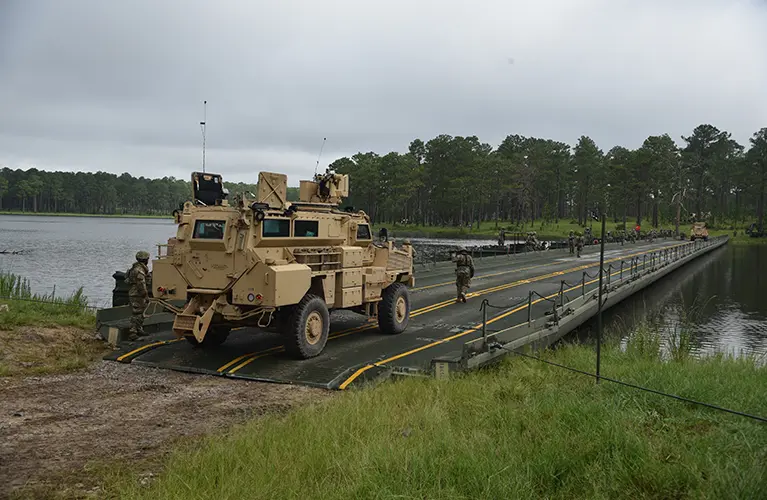







Military Load Classification (MLC) is a NATO standard used to define the load-bearing capacity of routes, bridges, and ferries. It ensures vehicles can safely operate on a given surface by matching the vehicle’s classification with the surface’s maximum supported class.
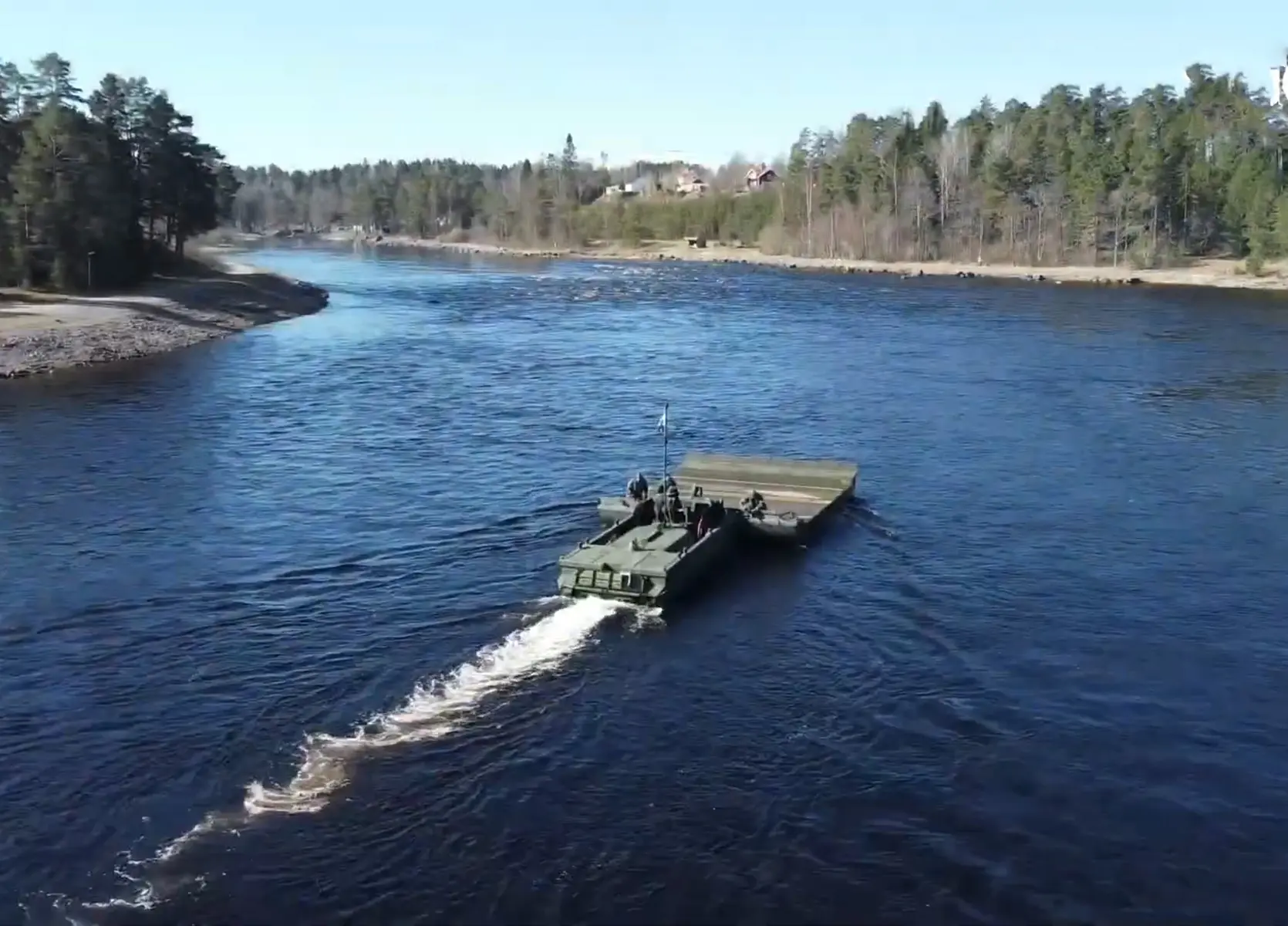
System Overview
Birdon delivers a Complete Wet Gap Crossing Solution to NATO and allied forces across the world.
In partnership with General Dynamics European Land Systems – Bridge Systems (GDELS-BS), the system comprises of the Improved Ribbon Bridge (IRB) from GDELS-BS, the Bridge Erection Boat (BEB) and the Bridge Adaptor Pallet (BAP) from Birdon.
The IRB is the global standard for wet gap crossing operations, as the only combat proven, in-service and in- production pontoon bridge system within NATO, the IRB sets the standards for capability, reliability and maintainability.
The same applies for the BEB, initially developed for the US Army, the BEB is again the only combat proven and in- production bridging vessel within NATO, the BEB provides unparalleled capability for bridging and rafting operations in the most demanding environments.
The most recent addition to the system is the Birdon BAP, developed to meet the needs of the modern combat engineer the BAP is a complete ground up development for the IRB and BEB, taking into account years of operational experience to deliver a transportation system that meeting all armed forces across NATO and our allies.
Quick Facts
- Fleet
450+ BEBs in operation worldwide
- Deployment
Global
- System
IRB + BEB + BAP, Fully Interoperable with M3 Amphibious Vehicle, SRB and FSB from GDELS
- Design Life
20+ years
System Architecture
The Birdon Wide Wet Gap Crossing System is a modular, deployable capability designed for rapid assembly and sustained operation across riverine and littoral environments. It integrates:
Bridge Erection Boat (BEB)
High thrust operation in high particulate environments, integration with transport systems.
Improved Ribbon Bridging (IRB)
Critical bridging component for rapid water crossing.
Bridge Adapter Pallet (BAP)
Streamlines the deployment and transport of bridging systems
Operational Capability
The integrated system enables:
- Rapid establishment of wet gap crossings
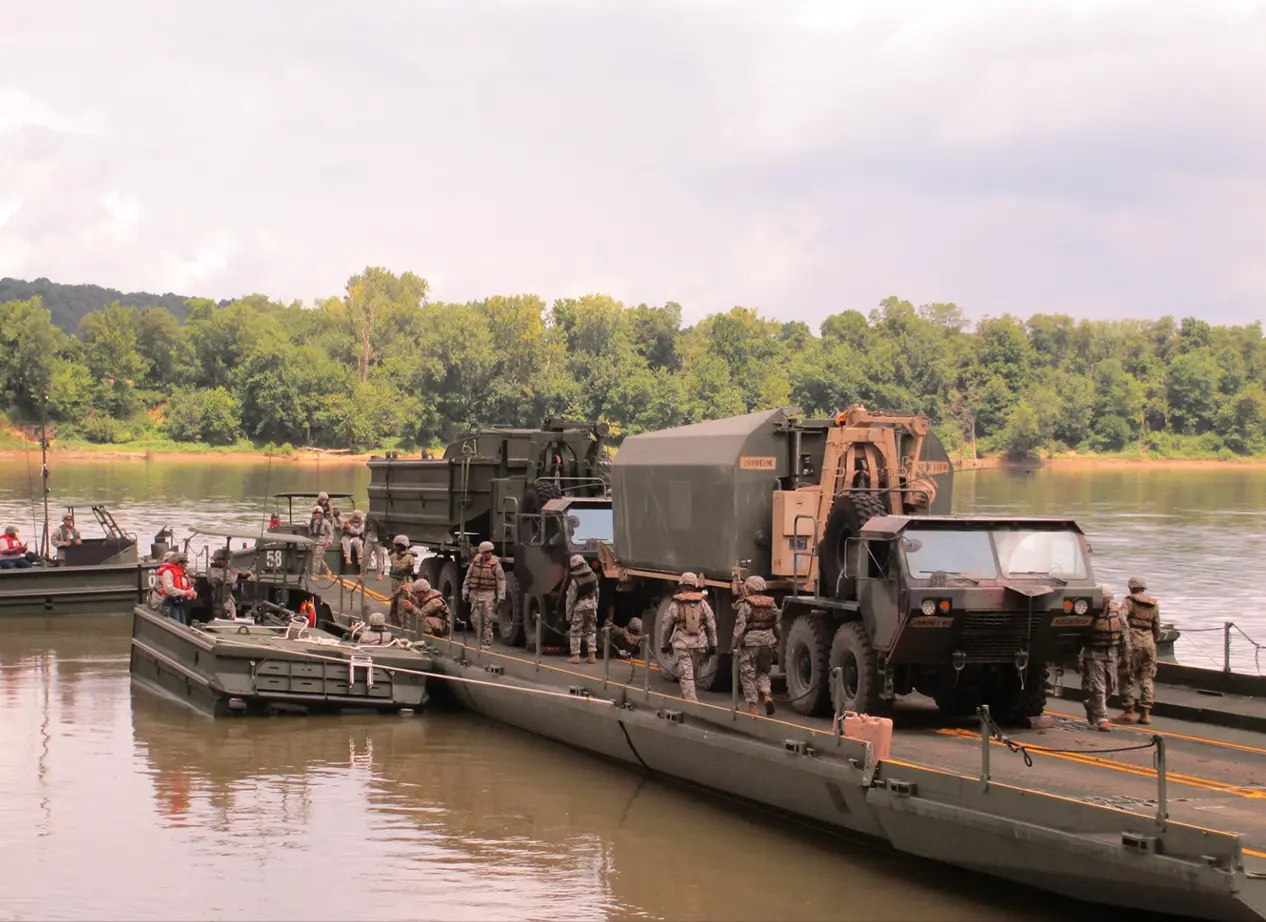
- Transport of heavy vehicles and armoured platforms
- Bridge assembly in dynamic river conditions
- Scalable deployment across multiple crossing points
- BEB reduces the number of vessels required compared to legacy systems, while improving control, safety, and deployment speed.
- BAP integration enables deployment using a wide range of military and commercial transport vehicles, reducing reliance on specialised fleets.
Key System Advantages
Proven system integration
Delivered in partnership with leading defence contractors, combining Birdon’s BEB platform with complete bridging system integration.
Operational performance
High thrust propulsion enabling control in fast-flowing, debris-heavy environments and improved stability under load
Reduced manpower
Lower crew requirements relative to legacy bridging platforms, reducing personnel exposure during assembly and operation
Deployment efficiency
Rapid launch, assembly, and recovery via BAP-enabled transport systems, enabling faster deployment cycles
Safety and control
Improved operator safety, vessel control, and system stability during bridge assembly and ferry operations
Interoperability
Aligned with NATO bridging standards and interoperable across allied force structures.
Modernisation of legacy capability
Replaces ageing bridging systems with enhanced performance, reliability, and operational efficiency
Rapid production
Systems deployable in as little as four months, supporting urgent replacement of ageing bridging capability.
Scalability
Applicable across multiple operational scenarios, from tactical crossings to sustained bridging operations
System performance
Autonomy & control
- Follow-Me Mode multi-vessel coordinated operation
- Dynamic Positioning (DP) capability
- Semi-autonomous operational modes
Key features
- High thrust and manoeuvrability in fast-flowing and debris-laden waterways
- All-weather enclosed cabin with optional ballistic protection
- NATO interoperability across bridging systems and transport platforms
- Integration with BAP hooklift system for rapid deployment and recovery
- Low maintenance design engineered for continuous operation in harsh environments
- Proven subsystem integration within IRB-based bridging architectures
Military Load Classification (MLC)
Configured to support NATO bridging requirements, enabling transport of heavy vehicles and armoured platforms within IRB ferry and bridge configurations.
BEB Technical Specifications
- Propulsion Twin NAMJet Mass Flow Waterjets
- Speed 28+ knots
- Crew Two Person (Driver + Rigger), capable of fully unmanned operation with advance iNAV controls
- Control NAMJet iNAV control system, electric-hydraulic control with integrated advanced capability such as joystick, station keeping and remote operations
- Draft Shallow – riverine and littoral
IRB Technical Specifications
- MLC Supports ALL NATO heavy battle tanks and equipment
- Bridge Length Unlimited
- Interoperability Only system fully interoperable with M3 Amphibious Vehicle and legacy bridge systems of SRB and FSB
- Propulsion Birdon Bridge Erection Boat
- Deployment Speed Fast launch and fully operationally ready in less than 1 minute
BAP Technical Specifications
- Height Low profile design to meet NATO road transportation requirements with Military Tactical Truck
- Winch Hydraulic with anti-jam spooling system
- Hooklift Integrated hooklift to allow operation on various vehicles without hooklift for example flatbed truck and standalone trailers
- Locking mechanism ISO corner locks and hooklift locks
- Launching Fast launch hydraulic system for IRB and quick release for BEB
What Our Clients Say
“I can tell you for the past several years I have continually told people that the absolute best acquisition that the Engineer Regiment has had since I have been here (12 years) has been the Bridge Erection Boat. By every metric; cost, schedule, performance, material release, manuals, fielding, quality,… I always hold you guys up as an example of what good looks like.”
Jim Rowan
Deputy Commandant, US Army Engineer School
FAQs
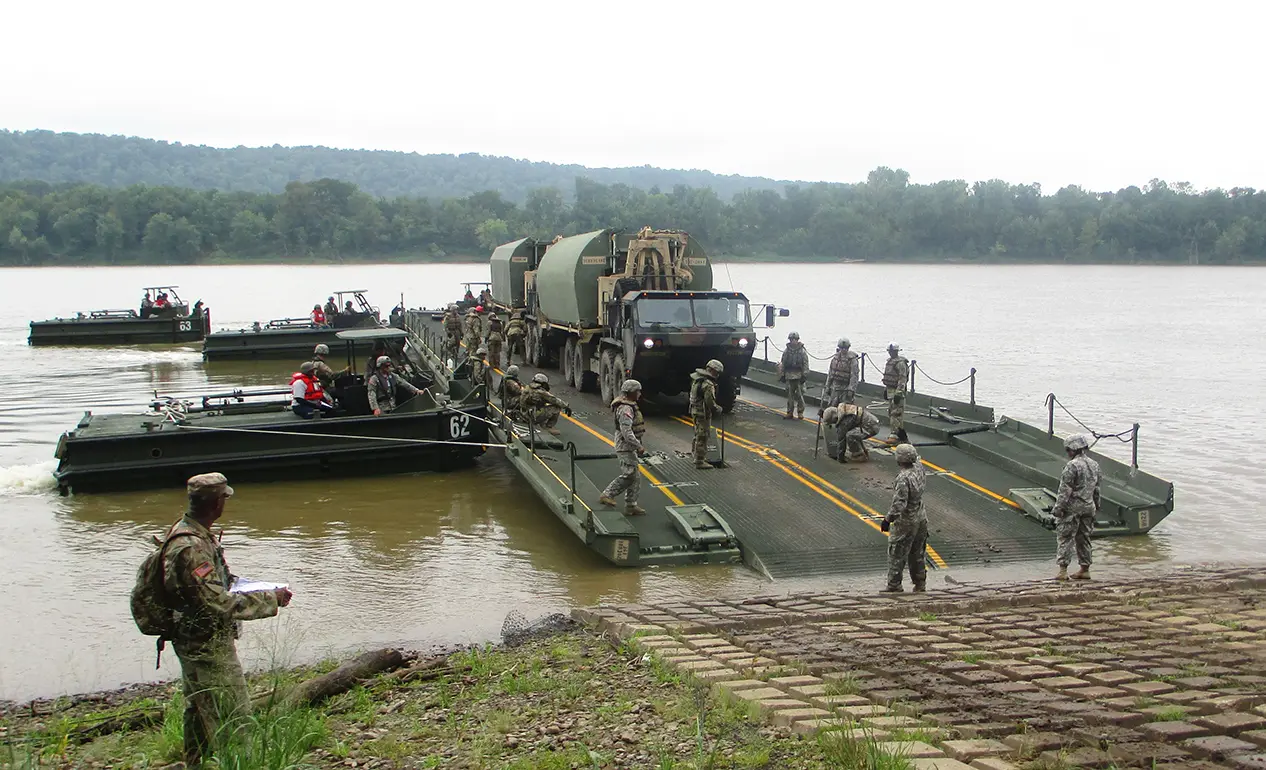
The number of pontoons depends on the required MLC rating. For example, an MLC80T ferry—commonly referred to as a “5 Bay Ferry”—is typically constructed using three Inner IRBs and two Ramp IRBs. Two BEBs are sufficient to operate this configuration in water currents of up to 3.5 m/s.
The Birdon BEB has a top speed of over 28 knots, enabling rapid deployment and manoeuvrability in operational environments.
The Birdon BAP is designed for versatility and can be loaded onto military tactical trucks and standard load handling systems. Its integrated hooklift system also enables compatibility with non-military trucks, flatbed trucks, and trailers, while retaining full launch and recovery capability for BEB and IRB systems.
No. The pontoon (IRB) does not self-propel; it is powered and manoeuvred by the BEB.
There are over 450 BEBs and more than 3,000 metres of IRB systems in operation globally.
The BEB, BAP, and IRB systems are purpose-built for military bridging operations and are engineered to perform reliably in harsh environments. They are designed for continuous use with minimal maintenance requirements.
The system is designed for a minimum operational lifespan of 20 years.