

Program Overview
In July 2024, Birdon was awarded the Griffin RTM Disposals Services Project by Woodside Energy. The project involved the onshore receival, deconstruction, recycling, and disposal of the recovered Riser Turret Mooring (RTM) structures from the Griffin offshore oil and gas field.
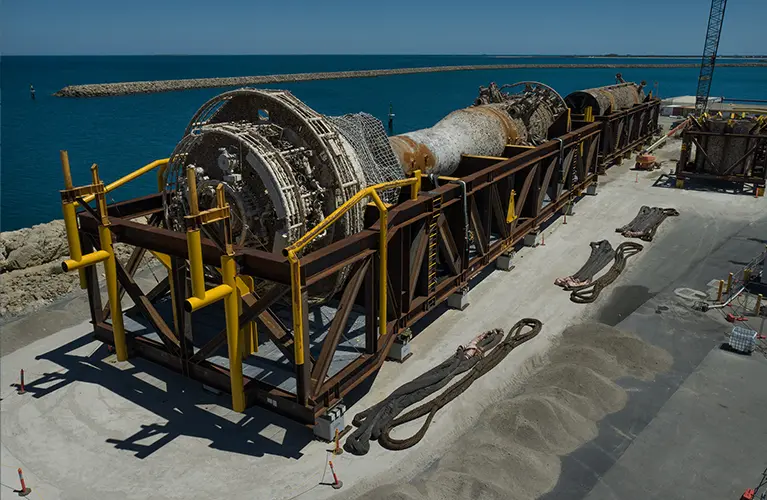
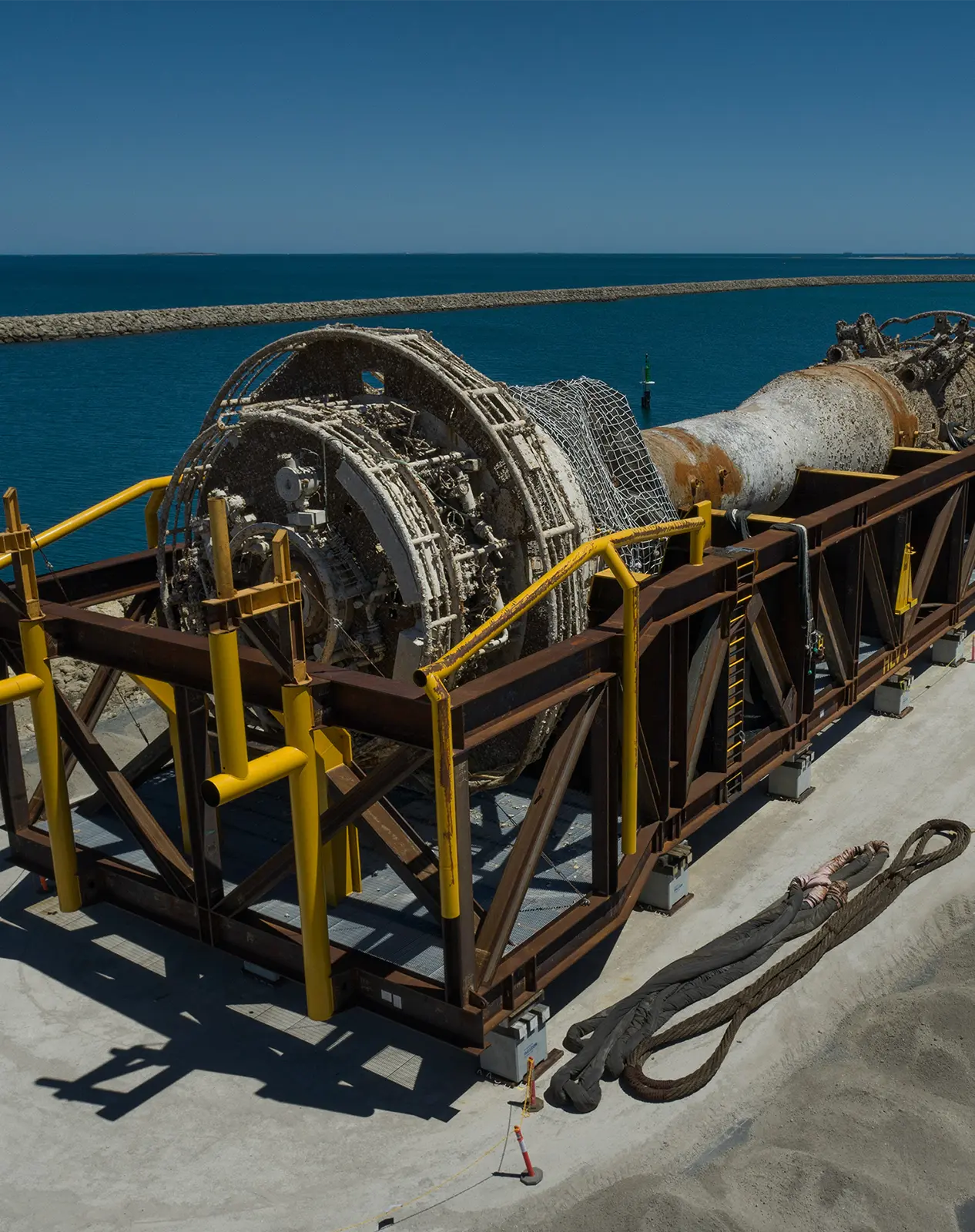
Delivered in multiple sections by Heerema’s Heavy Lift Vessel DCV Aegir, the RTM arrived at Wharf 4, Australian Marine Complex (AMC), Henderson, on 7 December 2024. Birdon’s scope included safe offloading, systematic dismantling, hazardous material management, waste classification, and sustainable material disposal.
Quick Facts
- Client
Woodside Energy
- Location
Australian Marine Complex (AMC), Henderson, WA
- Lifecycle Stage
Decommission
- Timeline
December 2024 – July 2025
- Asset
Riser Turret Mooring (RTM) structure
Objectives
- Safely dismantle and dispose of the Griffin RTM structure
- Maximise material recovery and minimise environmental impact
- Safe and compliant management of hazardous materials including NORM and mercury contamination
Challenges
- Safely removing Hazardous Materials and Stored Energy throughout the complex structure
- Managing structural integrity uncertainty throughout deconstruction process
- Ensuring all hazardous materials and liquids contained to prevent environmental impact and delivered to compliant disposal facilities.
Birdon’s Approach
Birdon applied a combination of conventional heavy-lift techniques and innovative engineering solutions to execute the project safely and efficiently.
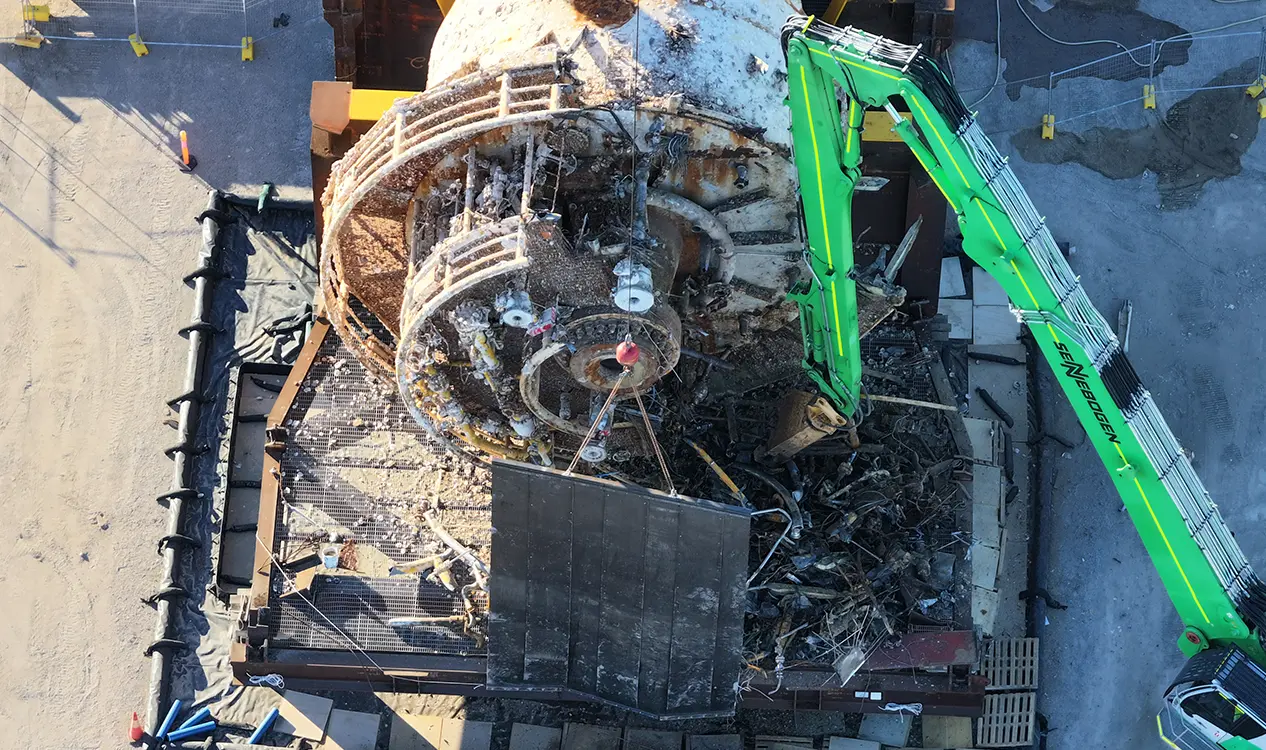
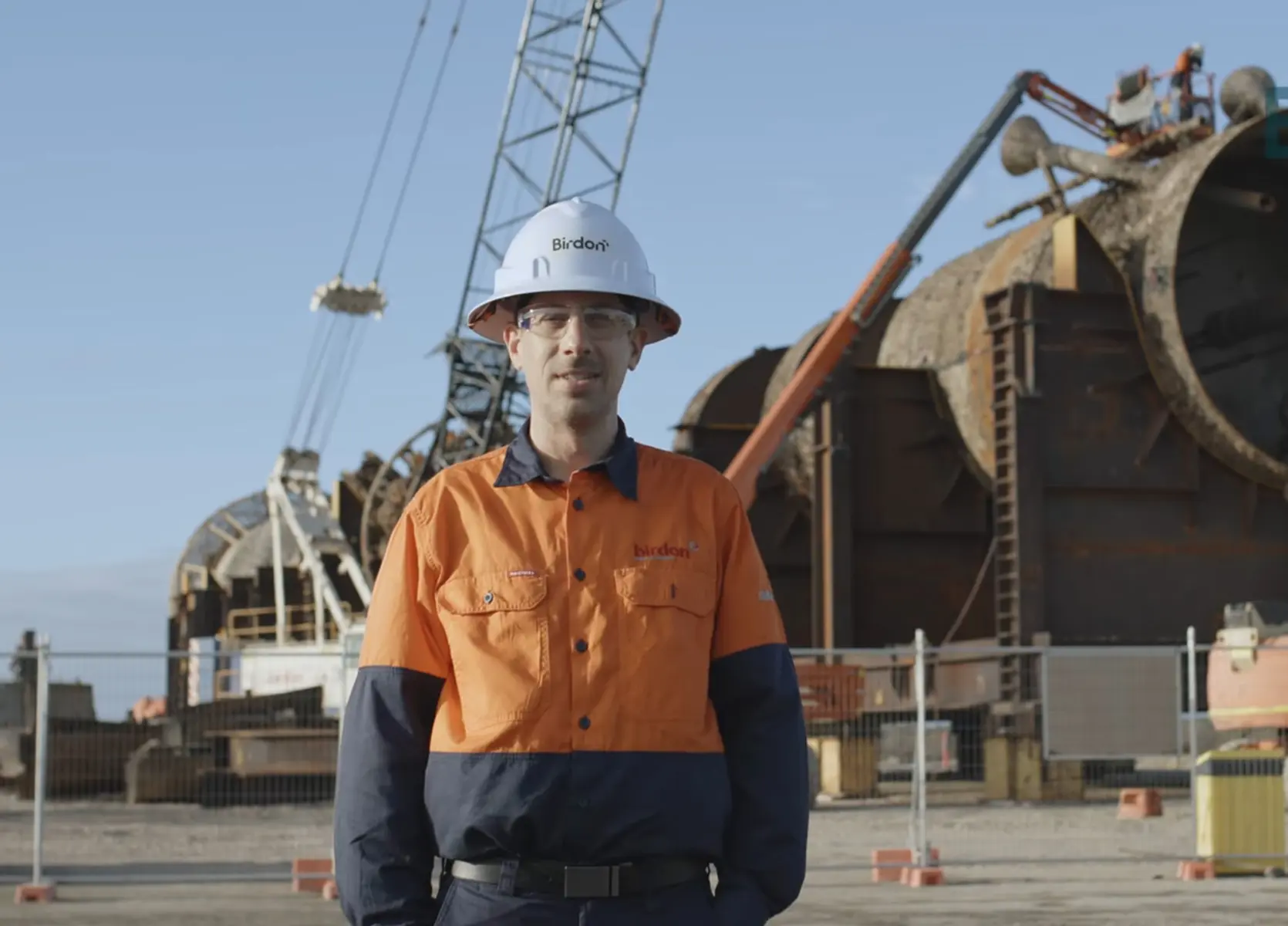
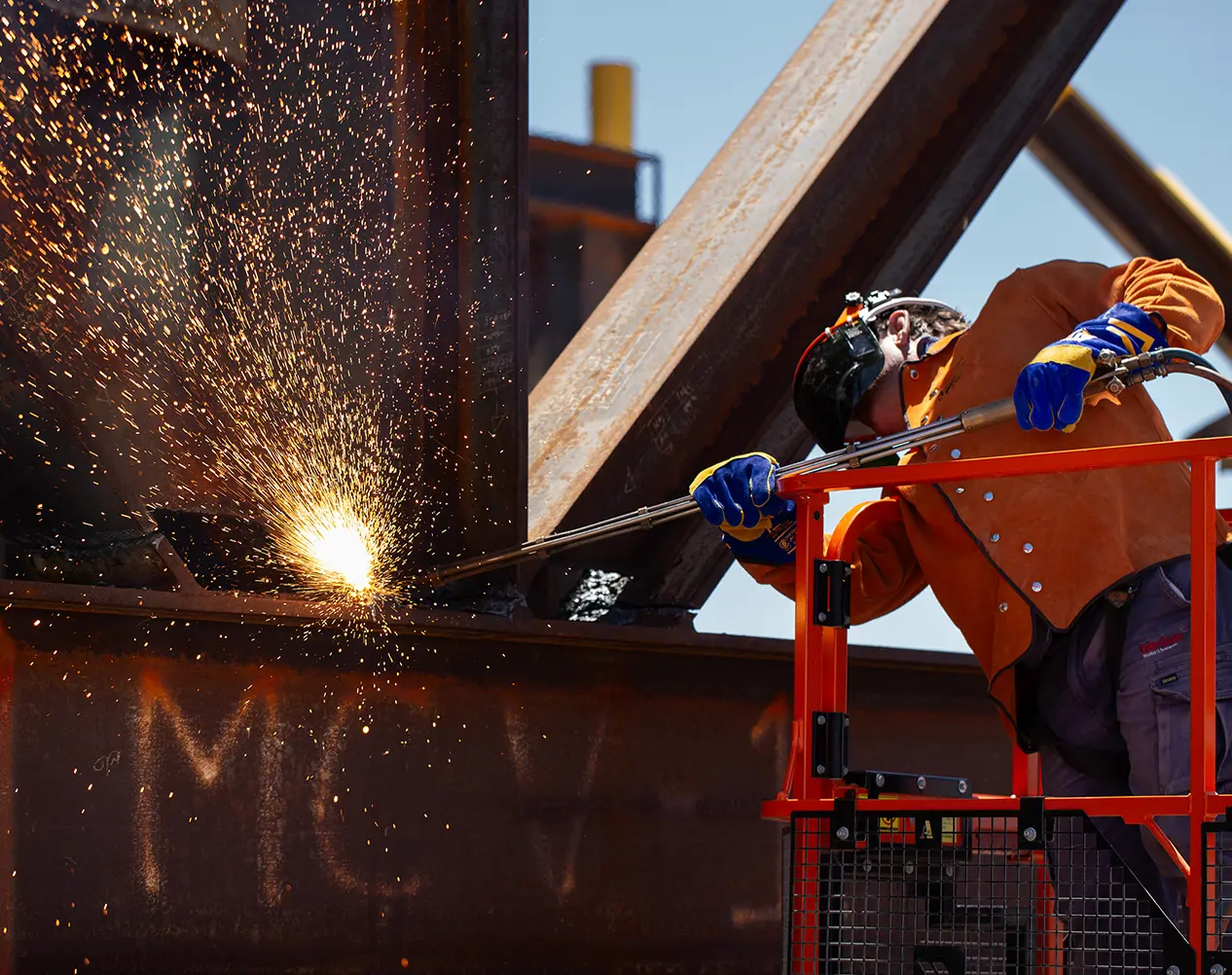
Custom-engineered set-down aides and support cradles were deployed during mobilisation and load-in to ensure precise placement and reduce manual handling risks. Deconstruction was carried out using a hybrid methodology, combining oxy-cutting, mechanically induced collapse, and shear cutting using high-reach excavators and 150t crawler cranes to minimise working-at-heights exposure while maintaining structural control.
High-reach excavators were used to dismantle the RTM top deck in areas with potential trapped pressure, energised equipment, and hazardous contamination, eliminating the need for direct personnel contact. In-situ foam removal frames, netting, and containment systems enabled controlled removal of waterlogged materials at height.
All lifting operations were pre-engineered using centre-of-gravity calculations and independently verified to mitigate load shift risks. Material separation workflows were integrated into the process to segregate steel and contaminated materials, maximising recycling outcomes.
Risk-controlled cutting methods were adapted in real time to manage ignition risks, while containment systems, exclusion zones, and decontamination protocols ensured safe handling of hazardous materials including NORM and mercury.
Outcomes & Impact
Birdon delivered a technically complex offshore decommissioning project with a strong focus on safety, sustainability, and operational control.
The project achieved 100% recycling of all non-contaminated metals and a 90% total material recovery rate, with only 10% of materials sent to landfill, primarily hazardous or contaminated waste.
Zero Lost Time Injuries were recorded across 10,424 project hours, supported by proactive safety systems, daily prestarts, permit-to-work processes, and continuous hazard identification.
The program also delivered regional economic benefit through partnerships with local Western Australian recycling and waste management facilities, reinforcing Birdon’s commitment to sustainable, locally integrated project delivery.
Capabilities in Action
- Heavy-lift engineering and complex structural dismantling
- Hazardous material management including NORM and mercury
- Precision lifting and engineered load control methodologies
- Hybrid deconstruction techniques (oxy-cutting, shear cutting, mechanical collapse)
- Environmental containment and waste classification systems
- Resource recovery and recycling-first decommissioning approach
- Delivery aligned with environmental and radiation safety management policies