


The Industry Context
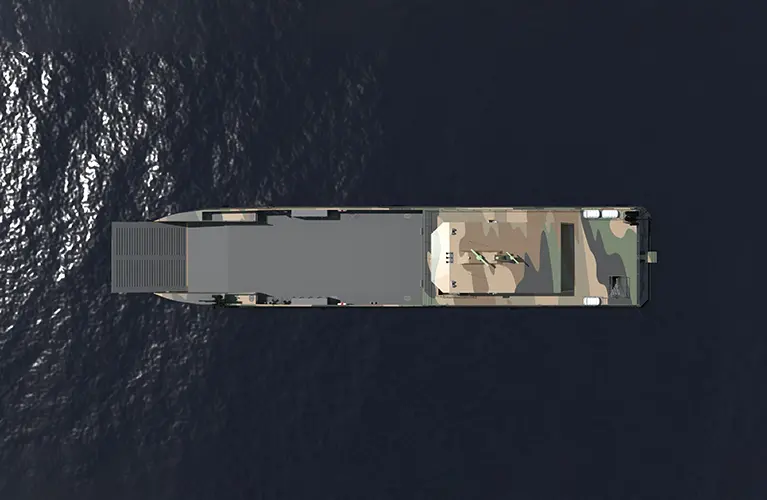
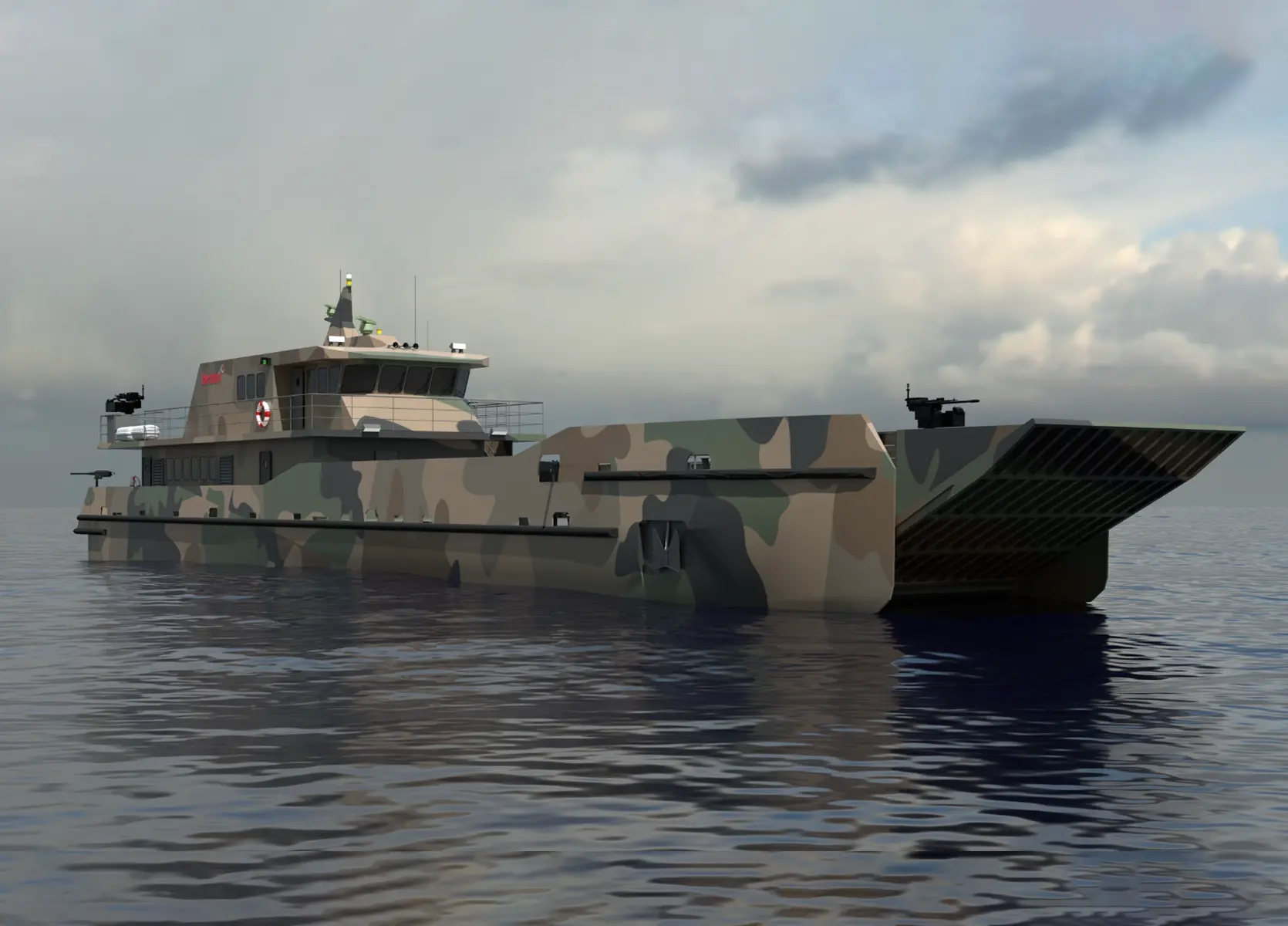
Birdon has been selected by the US Marine Corps Warfighting Laboratory (MCWL) to design and build their Ancillary Surface Craft (ASC) design — a next-generation littoral and riverine craft supporting Expeditionary Advanced Base Operations (EABO).
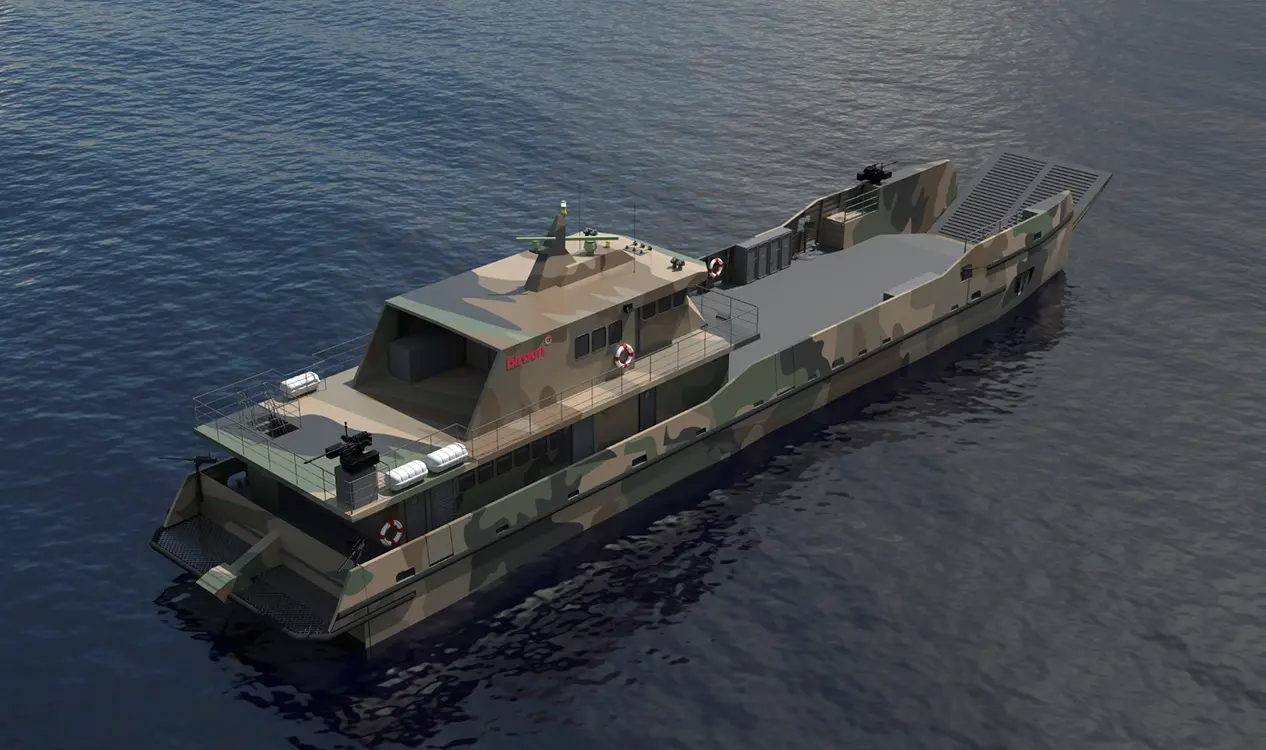
The Birdon ASC combines the capabilities of traditional landing craft with a unique beach access, modern autonomy, endurance and range. Unlike in-service short-range shuttle connectors reliant on motherships, the ASC is designed for independent oceanic transits, sustained operations and rapid deployment in shallow or austere environments.
Construction of two prototype ASC-M vessels commenced in 2025 in partnership with C&C Marine and Repair in Louisiana, with delivery and evaluation scheduled for 2026.
Quick Facts
- Client
United States Marine Corps
- Lifecycle Stage
Prototype / Design & Build
- Timeline
2025–2026 (prototype phase)
- Location
Belle Chasse, Louisiana
- Fleet Scale
Up to 117 vessels through 2029
Program Objectives
- Deliver and operate ASC to assess its operational roles providing tactical mobility to the deployed force
- Enable autonomous or crewed operations across littoral, riverine and shallow-water environments
- Provide increased self-reliance and endurance beyond existing crafts
- Support US industrial base growth through local manufacturing and supply partnerships
- Enable scalability and export potential across allied amphibious forces
Challenges & Key Metrics
Prototype construction commenced in 2025 at Belle Chasse, Louisiana, with delivery and MCWL operational evaluation scheduled for 2026.
Embarked Marines per craft
Payload capacity
Shallow draft operation
Birdon’s Approach
The ASC design draws on Birdon’s experience across its Sea-Shore-Ship-Shore craft range and proven defense programs, including the Bridge Erection Boat and Medium/Heavy Landing Craft.
Each vessel is engineered for independent operations with:
- Very shallow beach accessibility
- Total payload capacity up to 55 tons (including an optional 8 tons of fuel with rapid land discharge capability).
- Embarked personnel capacity of up to 40 Marines, housed
- Shallow draft operation (~4.5 ft) for beach and riverine access
- Oceanic endurance for long-range self-deployment
- High maneuverability, including the ability to turn within its own length operating safely in extreme sea conditions
Design features include:
- Self protection with fitted automatic weapon stations and crew weapon stations
- Forward-looking sonar
- Automated systems from navigation through to full vessel automation
- Modular cargo deck supporting vehicles, or powered containers
- Digital control and monitoring systems derived from Birdon s US Army and Coast Guard programs
The ASC represents a step-change in organic Marine Corps capability — combining tactical accessibility, payload, operational range, and flexibility in a design able to be built in any competent commercial shipyard.
Program Milestones
2024
MCWL Selection
Birdon selected to advance its ASC concept following competitive white-paper evaluation
2026
Delivery and Testing
Prototypes delivered to MCWL for evaluation and operational trials.
2025
Prototype Production Start
Two ASC-M vessels begin build in Belle Chasse, LA.
2027+
Transition & Future Production
Evaluation outcomes to inform future US and allied production opportunities
Outcomes & Impact
The ASC design draws on Birdon’s experience across its Sea-Shore-Ship-Shore craft range and proven defense programs, including the Bridge Erection Boat and Medium/Heavy Landing Craft.
Operational Impact
- Increased tactical flexibility for the deployed force
- Reduced reliance on motherships for logistics and resupply
- Enhanced capability working with larger amphibious capabilities
Industrial Economic Impact
- Alignment to the US Shipbuilding strategy – opening up the commercial yards to defense work, using Birdon’s manufacturing model and inherent design features
- Expansion of US workforce participation across engineering and supply chains
- Built entirely in the United States. It currently supports skilled shipbuilding jobs in Louisiana, and engineering jobs in Louisiana and Connecticut